The short answer
Cost per square foot can be a useful reference, but it is not enough to judge a quote. The total can vary with the attic’s area, how much insulation is being added, the material, access and the preparation work required. Removing old insulation, sealing air leaks, or addressing moisture or pest problems can also change the price. Compare the work described, not just the total divided by the area.
A significant difference between two quotes is not automatically unreasonable. One may include removal, air sealing and cleanup, while another covers only adding insulation. Ask each contractor to specify the same scope of work, materials, target thermal resistance and exclusions so you can make a fair comparison.
What affects attic insulation cost per square foot?
Area is a starting point for the calculation, but it does not explain the whole job. Some tasks do not scale directly with the number of square feet: protecting the home, getting equipment into the attic, clearing access around the hatch or sealing leaks around openings. A quote may show an average cost per square foot while listing separate charges for certain steps. Ask what each line covers before comparing the average.
- The target insulation depth The more insulation needed to reach the specified performance, the more material and labour the quote may include. Ask for the planned depth and final thermal resistance rather than relying on a vague description such as “add insulation.”
- The material Insulation materials have different characteristics and installation methods. Check which type is proposed, whether it will be blown in or installed as batts, and how much material is included.
- Access to the attic A small hatch, limited room to move or cluttered areas can make inspection and moving equipment more difficult. Ask whether the quote includes protection, access work and labour in hard-to-reach areas.
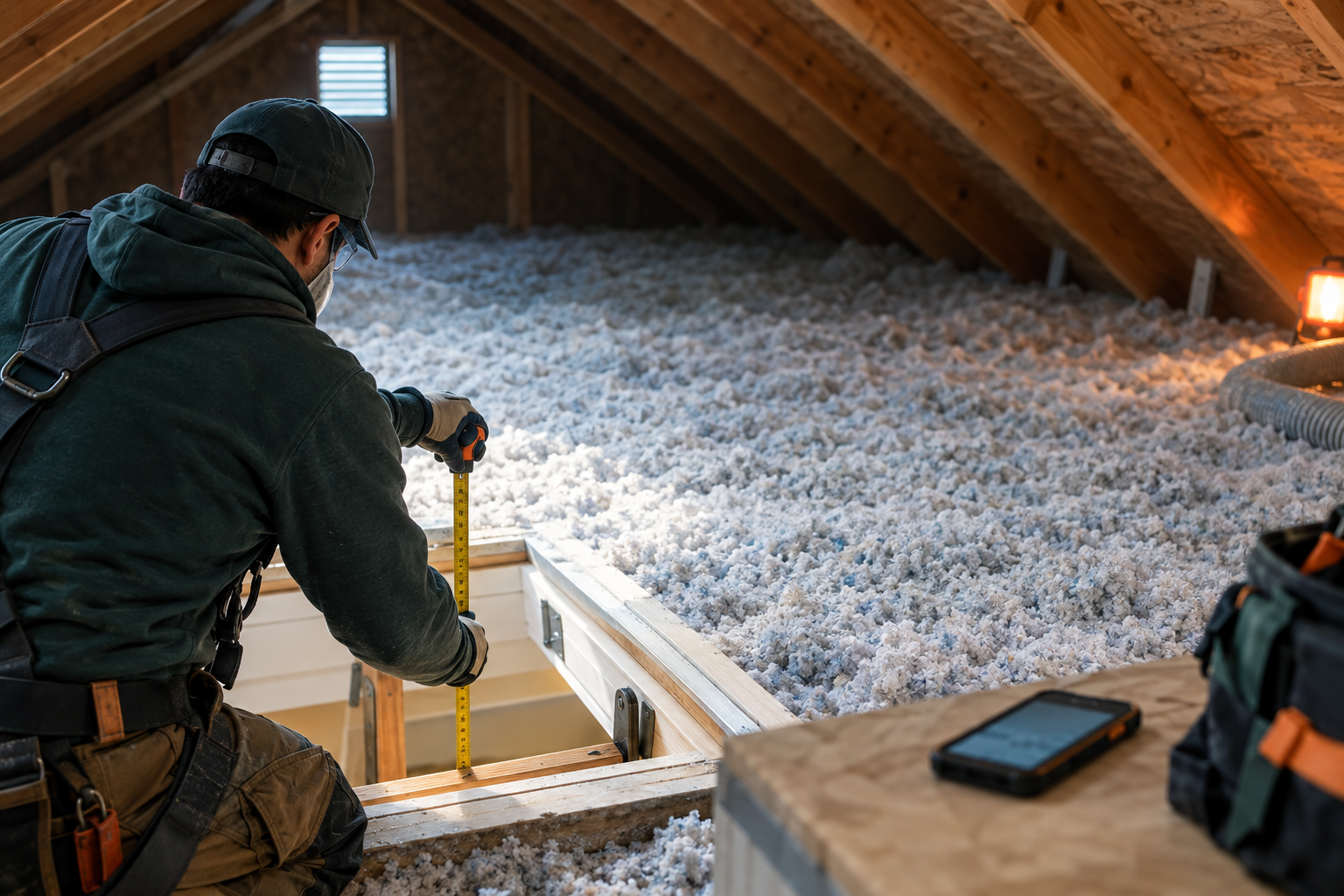
- The attic hatch Ask separately whether the hatch will be insulated and air-sealed, and how the contractor will maintain access and any required clearances.
- Preparation Moving or protecting belongings, cleaning, and installing baffles or barriers may be included, excluded or charged separately. Have the contractor identify each item in the quote.
Does old insulation need to be removed?
Not necessarily. Existing insulation does not always need to be removed before more is added. The decision depends on its condition, whether it is contaminated or damp, and what problem needs to be addressed. Insulation that is dusty or darkened by air movement is not, by itself, proof that it all needs to come out. Air leakage may need to be corrected, with the insulation put back in place. Ask the contractor what they observed and why they recommend full or partial removal.
Removal adds work that should be compared: the extraction method, bagging or collection, cleaning, hauling and disposal. If areas have been soiled by rodents, ask whether the quote covers cleaning and treatment, or only removal of the insulation. Pest control and repairs to openings that allow pests to enter may be separate work. Do not assume that “remove and replace” automatically includes those services.
Be cautious if you find or suspect vermiculite, which may contain asbestos. Do not disturb it or try to remove it yourself. Health Canada and the Government of Quebec recommend limiting disturbance and consulting qualified resources or professionals to assess the situation. Applicable rules and practices can differ by province, state or country. For a specific situation, contact the relevant authorities or a qualified specialist.
Why do air sealing and repairs matter?
Insulation slows heat transfer; air sealing addresses air leaks. If a quote includes both, it should describe where leaks will be checked and sealed, and which materials or work are covered. Openings around wires, plumbing, light fixtures or the attic hatch may need particular attention. In Quebec, Hydro-Québec also lists items to be air-sealed in the requirements for its LogisVert program. Those requirements apply to that rebate and do not replace an assessment of the building.
Moisture can change what should happen first. A leaking roof, wet insulation, mould or deteriorated wood should be assessed before simply covering everything with a new layer. Adding insulation does not fix the source of a leak or a ventilation problem. Ask whether the contractor noticed signs of moisture, whether the quote includes an intervention, or whether work should wait until a repair is made. Diagnosis or restoration may be offered separately; do not assume it is included.
How can you compare two insulation quotes?
- Check that both contractors use the same attic area and identify which parts are covered, including areas that are hard to access.
- Compare the intended result: insulation type, planned depth and stated thermal resistance after the work.
- Ask each contractor to separate adding insulation from removing existing material, cleaning, air sealing and repairs.
- Confirm what is planned for the attic hatch, ventilation, openings to be sealed and protection of the home.
- Have exclusions, conditions that could change the amount, and the approval process for unexpected work written down.
- Compare taxes and possible rebates separately. Do not subtract a rebate from the amount until you have checked eligibility.
Also ask how the installed quantity will be checked after the work. For example, find out whether the insulation depth or level will be measured and recorded on the invoice. A clear quote tells you what you are buying and makes comparison easier, even when contractors organize their line items differently.
How does a rebate change the calculation?
A rebate may reduce the net cost for an eligible homeowner, but it does not make quotes directly comparable or guarantee that every line item will be covered. Check the conditions, required work, records to keep and when the application must be submitted. Programs change, and rules vary by location. Always check the current official program page before signing a contract or starting work.
In Quebec, as of November 24, 2026, Hydro-Québec’s LogisVert page lists a $1,500 rebate for roof insulation and air sealing when all requirements are met. Published conditions include a minimum thermal resistance of RSI 8.8 or R-50, insulation across the full roof area and required air-sealing work. The program also has criteria for the home and the contractor. This amount is not an insulation price or a guaranteed reduction for every project. Check eligibility, terms and required documents with Hydro-Québec.
How this looks in QuoteRoute
QuoteRoute is an online insulation quote-request template with a home and attic quiz that displays a price range calculated from the contractor’s pricing grid and flags certain cases for review. The demo does not replace an inspection or a detailed quote, and it does not actually send calls, texts or emails. You can try the demo, then contact TECHMA about the source code, a version adapted to your business, or a hosted and managed version; each option is priced by quote.
Terms used on this page
Air sealingAttic hatchVermiculite
Sources
- Programme LogisVert – Clientèle résidentielle Hydro-Québec
- Guide de participation à l’intention de la clientèle résidentielle — Programme LogisVert Hydro-Québec
- Asbestos and your health Santé Canada
- Prévenir les effets de l’amiante sur la santé Gouvernement du Québec
- Étanchéité Gouvernement du Québec
- Attic Air Sealing Project ENERGY STAR